One conversation with my wife changed how I think about planning.
Read time: 4 minutes
A few days ago, my wife pointed out something that caught me off guard. It wasn’t about our itinerary or how much time I spent with our family. It was about how I think.
“You think much more deeply about work than you do about our family.”
I was convinced she was wrong. I had planned the trip, researched restaurants, mapped out activities, checked the weather, and thought about the schedule. From my perspective, I had done exactly what I was supposed to do.
Then she explained what she meant. She said I had planned the itinerary, but I hadn’t really planned the experience.
During our recent family trip, we were trying to avoid the heat wave, so I suggested leaving around 8:00 a.m. Since we’d be on the road early, I picked a breakfast place about an hour away because it had great reviews and fit our route.
From my perspective, the plan made perfect sense. Then she asked a simple question: what if our daughter gets hungry before we get there?
That’s when I realized I wasn’t planning for the day. I was just planning the schedule.
I had optimized the route, the departure time, and the restaurant. My wife was thinking about how our daughter would experience the morning. We weren’t solving the same problem.
After almost fifteen years in finance, thinking several steps ahead has become second nature at work. When I’m evaluating a new project, I naturally think about second-order consequences, downside scenarios, operational complexity, and how a decision affects different stakeholders. I rarely even notice that I’m doing it.
At home, I often stop much earlier. I ask, “What should we do this weekend?” My wife asks, “How will this affect our daughter? Will everyone actually enjoy the day? What happens if things don’t go according to plan?”
That conversation stayed with me because I realized it wasn’t really about planning. It was about attention.
The people we care about don’t always measure love by how much effort we put in. Sometimes they measure it by whether they feel we’ve thought deeply about what matters to them.
The more I reflected on it, the more I realized I do this in other parts of my life too. At work, I build spreadsheets, think through risks, and consider second-order consequences before making important decisions. At home, I sometimes make equally important decisions after only a few minutes of thought—not because I care less, but because I’ve trained myself to think deeply in one part of life and intuitively in another.
Maybe that’s why my wife’s comment stayed with me. She wasn’t asking me to become a better planner. She was asking me to bring the same quality of thinking home that I naturally bring to work.
Since then, I’ve started asking myself a different question. Instead of asking, “What’s the plan?” I’m trying to ask, “How will the people I love experience this?”
That small change has already begun to change the way I think.
Sometimes the greatest expression of love isn’t time. It’s thoughtful attention.
The more I reflect on it, the more I realize this extends far beyond family. The best leaders think beyond the task to how decisions affect their teams. The best investors think beyond today’s returns to long-term consequences. The best parents think beyond the itinerary to how their children experience the day.
Looking back, I don’t think the lesson is to become a perfect planner. It’s to remember that the people who matter most deserve our best thinking, not just our remaining time.
That’s a lesson I’m still learning.
If someone came to mind as you read this, I’d be grateful if you forwarded it to them. Most of the books I read, podcasts I listen to, and newsletters I enjoy came from someone I trust.
P.S. Has someone ever pointed out a blind spot that changed how you think? I’d love to hear your story. Just hit reply and let me know.
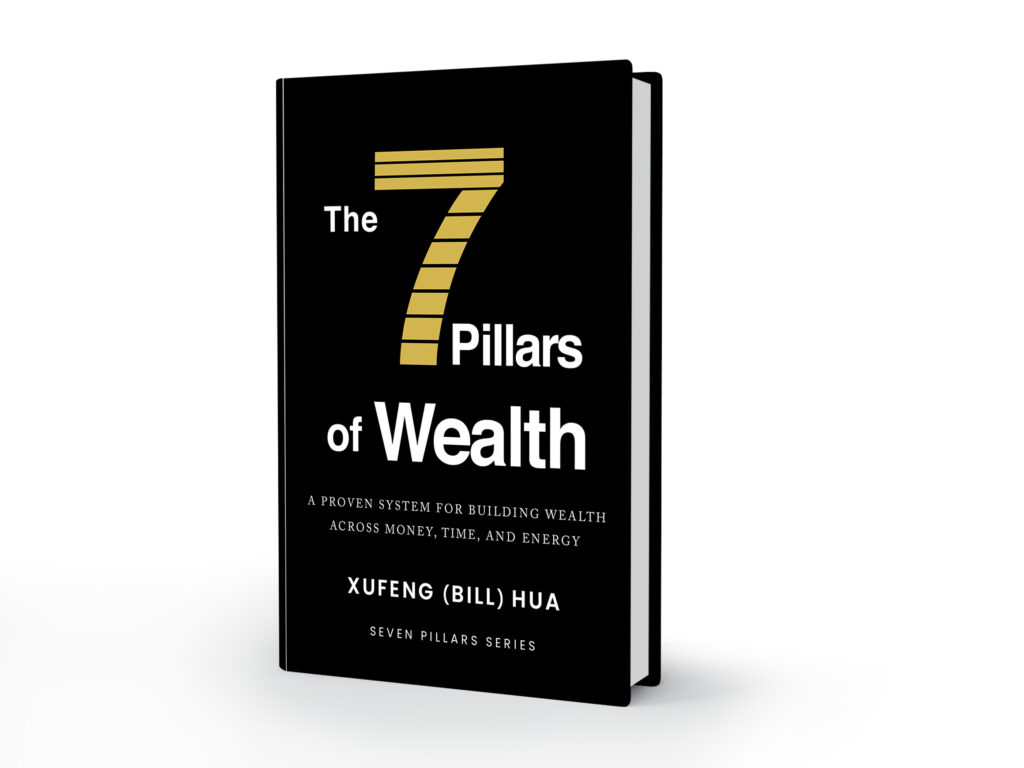
📖 Learn more about The 7 Pillars of Wealth: http://amzn.to/4tTl5gL
📝 Take the free 5-Minute Money, Time & Energy Checkup: https://xufenghua.com/checkup/
🌐 Explore more essays and resources: https://xufenghua.com
New here? Subscribe to Compound Emotion, my weekly newsletter about money, time, energy, and the decisions that compound over time.
– Bill