Why I’ve become more intentional about who I learn from.
Read time: 4 minutes
Before my workday begins, I usually carve out a little time to write. Most mornings, I’ll read a newsletter, listen to part of a podcast during my morning walk, or catch up on an article I saved the day before. I genuinely enjoy learning, but lately I’ve noticed something unexpected: the more information I consume, the less obvious it becomes what actually deserves my attention.
Ironically, finding information is no longer the hard part.
A few days ago, I listened to an interview with Guy Oseary, the longtime manager of Madonna and U2. One description of him stayed with me. Someone called him “a great curator of people.”
That phrase lingered in my mind.
For years, I assumed successful people simply had better information. They knew something everyone else didn’t or had access to opportunities the rest of us couldn’t see. Today, I’m not so sure.
The older I get, the more I notice that exceptional people don’t necessarily consume more information. They seem to have better filters. They know whose judgment deserves their attention and whose doesn’t.
That realization made me think about my own habits. Every week I read books, listen to podcasts, save articles, and explore new ideas. Yet when I look back at the ideas that genuinely changed how I think, very few came from random searches.
Almost all of them came through someone I had already learned to trust.
One book introduced me to another author. One podcast led me to another thoughtful guest. One newsletter pointed me toward an article I never would have found on my own. Over time, my learning has become less about searching and more about following thoughtful people.
Working as a hedge fund CFO has reinforced the same lesson. Most investment professionals have access to similar financial statements, market data, research reports, and news. Yet they often reach very different conclusions. The difference usually isn’t access to information—it’s judgment.
I’ve started to think learning works the same way. Technology has made information dramatically easier to access, and I use those tools every day.
But information isn’t the bottleneck anymore. Judgment is.
Technology can summarize a book or explain an idea. It can’t tell me whose thinking has been refined over decades, who consistently changes their mind when the facts change, or whose recommendations continue to prove valuable years later. Those are still deeply human qualities.
Lately, I’ve started asking myself a different question. Instead of asking, “What should I read?” I increasingly ask, “Whose reading list would I want to borrow?”
That small shift has quietly changed how I learn. Once I find someone with consistently good judgment, I’m no longer benefiting from a single recommendation. I’m benefiting from hundreds of decisions they made before deciding that a particular book, podcast, or article was worth sharing.
In an age of abundant information, good judgment becomes the scarce resource.
Looking back, many of the books, podcasts, newsletters, and even friendships that have shaped my thinking reached me through someone I already trusted. Maybe that’s one more reason trust compounds.
Not because trusted people always have the right answers, but because they help us spend our limited attention on the questions that matter most.
The more I think about it, the more I realize this idea extends well beyond learning. The people we choose to learn from quietly shape the questions we ask, the decisions we make, and ultimately the lives we build.
Perhaps that’s why I’ve become more intentional about choosing my teachers than choosing my information.
If this essay made you think of someone whose judgment has consistently improved your own, I’d be grateful if you forwarded it to them.
P.S. I’m always looking for thoughtful people to learn from. If there’s someone whose work has consistently sharpened your thinking, just hit reply and let me know.
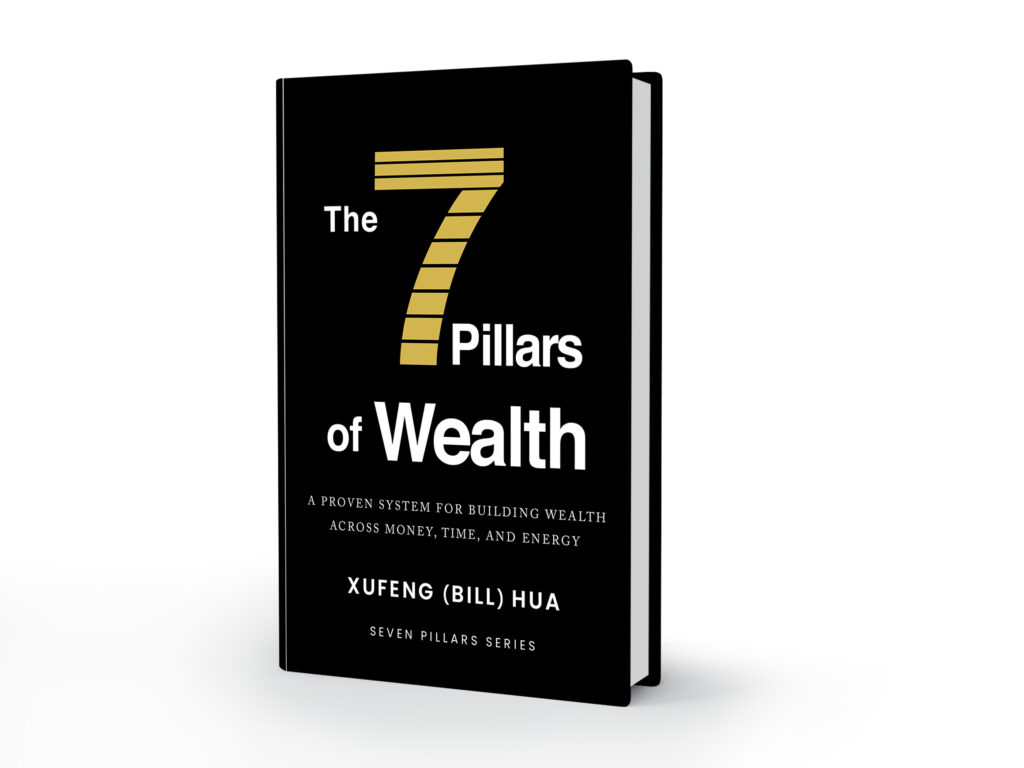
📖 Learn more about The 7 Pillars of Wealth: http://amzn.to/4tTl5gL
📝 Take the free 5-Minute Money, Time & Energy Checkup: https://xufenghua.com/checkup/
🌐 Explore more essays and resources: https://xufenghua.com
New here? Subscribe to Compound Emotion, my weekly newsletter about money, time, energy, and the decisions that compound over time.
– Bill